

Use the Pulse Pixel to connect the dots of your marketing performance
Understand exactly how customers find you and what marketing efforts drive conversions.
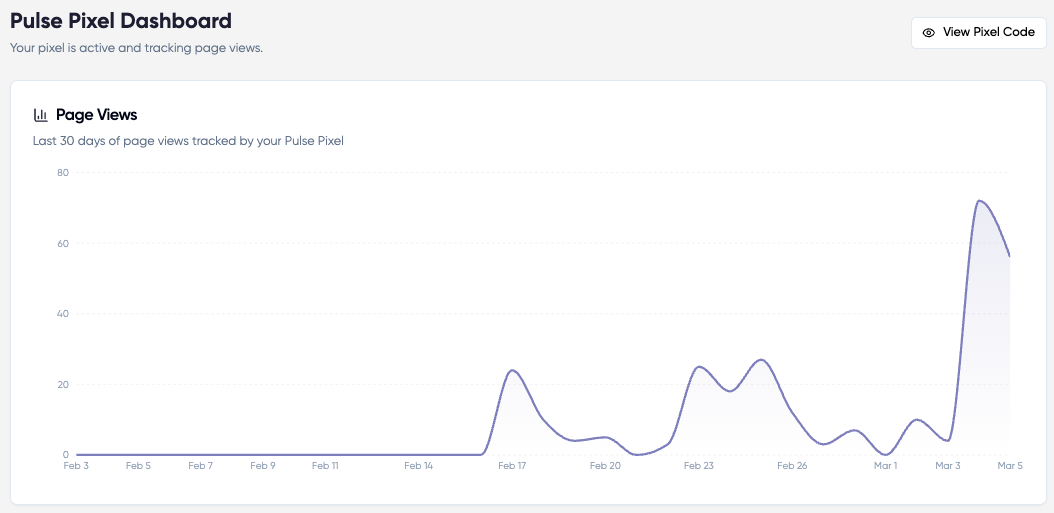
The Pulse Pixel tracks how visitors arrive at your website and the steps they take before becoming a customer. By collecting first-party data, it helps connect your marketing efforts to real conversions so you can see what's truly driving results.
Instead of relying on incomplete reporting, you’ll see how every click contributes to revenue.
The Customer Journey Challenge
Customers Rarely Convert on the First Click
Most people don't become customers the first time they visit your website. Instead, they interact with your business multiple times across different marketing channels before converting.
When only one channel gets credit, it can lead to misleading insights
Your Google Ads campaign might get credit for the conversion, but your social media ads may have introduced the customer to your business, and an email reminder might have brought them back to your website.
The Pulse Pixel captures first-party data directly from your website and connects each step of the customer journey
Instead of relying on one attribution model, you can compare multiple views of the same conversion. When you know what marketing efforts are truly moving the needle, you can reallocate budget, strategy, and improve results.
Your marketing attribution problems - solved
01
First Click Attribution
Who introduced the customer = 100% of credit is given to the first channel clicked
02
Last Click Attribution
What closed the deal = 100% of credit is given to the last channel clicked
03
Linear Attribution
How every step contributed = Divides credit equally among channels that led to the event
04
100% Attribution
Gives credit to everyone = Each channel gets 100% credit, similar to how most marketing platforms report their data
Create Conversion Events
Uses the Pulse Pixel event creator tool to build custom website events. It's simple to use and takes less than a minute to create.
Combine All Your Data
Analyze your 3rd party platform data, your own 1st party data, and offline data all in the same place.
Improve Marketing Attribution
1st party cookies are becoming the most reliable and privacy-friendly way to understand your marketing performance.
Frequently asked questions
What exactly is a pixel and how does it work?
The pixel is a snippet of code you will add to your website that collects first-party cookies. Collecting first party cookies allow you to understand when someone first enters your website, what source brought them to your website, and when they return and convert.
Why do I need the Pulse Pixel?
Privacy updates have made it harder for businesses to track marketing performance the way they used to. For businesses that rely on marketing data to grow, this creates a problem: less visibility into what’s actually driving customers.
Many ad platforms now use modeled data to report conversions, which means they are estimating and guessing when you receive conversions. The Pulse Pixel doesn't guess.
Adding the Pulse Pixel allows your business to track and own your own data. Marketing Pulse utilizes this data to help you understand your data, the performance, what is working, what is not working, and what to do next.
How do I add it to my website?
The snippet of code is placed within the head section on every page of your website.
To make adding the code easier, we also have the Google Tag Manager (GTM) steps by step instructions and an easy button to send the instructions to a developer.
The Marketing Pulse team can also assist if needed.
Is the Pulse Pixel compliant?
Yes, the Pulse Pixel is compliant and built with privacy in mind. The cookies collected are used only for analytics purposes and no personal identifiable information is collected or stored.
Because the Pulse Pixel collects first-party website data, businesses should ensure their website privacy and cookie policies appropriately disclose the use of this tracking technology. Always consult with legal advisors to ensure your implementation meets legal requirements.
Depending on your region, you may want to include a consent banner or disclaimer that says you are collecting first-party cookies for GDPR/CCPA compliance.